
While the corporate sector has benefited from massive capital expenditure, leading to sky-rocketing stock prices, investors would do well to keep an eye on the macroeconomic picture and government finances, not just corporate profits, for signs of trouble, alerts Debashis Basu.
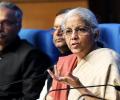
The eighth Budget of Finance Minister Nirmala Sitharaman continued to focus on 'GYAN' (Garib, Youth, Annadata, Nari) to maintain a consistent and coherent strategy initiated over the years in pursuing the government's vision for Viksit Bharat. The approach, characterised by incremental yet impactful steps, aims to create a compounding effect over time.

Two of Apple Inc's global vendors -- Wistron and Foxconn (through Han Hoi), which already manufacture Apple phones in India -- and a third entity, Pegatron, which will be setting up a new plant, have applied to the government to be eligible under the PLI scheme for large-scale electronics manufacturers.

After years of disappointing growth, the economy and the markets are poised for a breakout, notes Akash Prakash.

The World Bank has retained India's economic growth forecast for the current fiscal at 8.3 per cent as the recovery is yet to become broad-based. As per the first advanced estimates of the national income released by the National Statistical Office (NSO) last week, the economy is projected to grow at 9.2 per cent in 2021-22, surpassing pre-COVID level in actual terms, mainly on account of improved performance, especially in farm, mining and manufacturing sectors. "India's economy is expected to expand by 8.3 per cent in fiscal year 2021/22 (ending March 2022), unchanged from last June's forecast as the recovery is yet to become broad-based.

Shares of telecom services providers - Reliance Industries (parent of Reliance Jio), Bharti Airtel, and Vodafone Idea - have shed up to 23 per cent so far in the current calendar year as growth in the wireless subscriber segment begins to plateau amid higher tariffs and rising costs of smartphones. By comparison, the benchmark S&P BSE Sensex, and sectoral index BSE Telecom have dipped 1.8 per cent, and 12.6 per cent, respectively, ACE Equity data shows. However, analysts expect the trend to reverse soon as telecom services providers focus on the next leg of growth -- fixed broadband (FBB) segment.
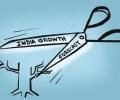
India's economy is projected to slow to 6.5 per cent in the fiscal year starting April but will remain the fastest growing major economy in the world as it fared better in dealing with the extraordinary set of challenges the globe has faced, the Economic Survey 2022-23 said on Tuesday. India's gross domestic product (GDP) growth of 6.5 per cent in 2023-24 compares with an estimated 7 per cent expansion in current fiscal year (April 2022 to March 2023) and 8.7 per cent in the previous year. Like the rest of the world, India too faced an extraordinary set of challenges in tightening financial conditions and supply chain disruptions from a prolonged war in Europe but "withstood them better than most economies", the annual document detailing the state of the economy said.

The BSA Gold Star is launched....Ola Enters e-motorbikes Biz... Bajaj, TVS To Enter e2Ws Market...

Apple is hoping to assemble in India 25 per cent of all iPhones produced globally to reduce its heavy dependence on China.

Recently, Prime Minister Narendra Modi met over 40 CEOs across broad swathes of industry, ranging from makers of mobile devices, auto components, food products to telecom networking equipment and pharmaceuticals. The agenda: To discuss how to make India an integral part of the global supply chain. The focus of the discussion would be the much touted yet not so well understood production-linked incentive scheme (PLI), the centrepiece of the government's drive to massively boost the manufacturing sector. To do so, the government has created a war chest of over Rs 197,000 crore to be paid out as incentives to over 14 industries in five years. There are three objectives to the scheme, two explicitly stated, one implied.

Few finance ministers announce any taxation measure that could upset the stock market. Ms Sitharaman decided to take that risk, observes A K Bhattacharya.

After ramping up production to meet the steep demand spike during the Covid-19 pandemic, Indian medical device makers are now struggling with idle capacity. According to industry estimates, around a third of the installed capacity, especially for consumables, disposables, small-ticket electronic items, etc., is lying unutilised. Sample this: India used to produce just 6.24 million pieces of PPE kits per annum before the pandemic, but by June this was ramped up to 233.87 million pieces per annum.

In a major push towards 'Make in India', Apple Inc is manufacturing 70 per cent of the mobile phones, in value terms, that it sells in the domestic market, in India, according to sources aware of the development. This is a sharp rise from the figure of 30 per cent just two years ago and marks a major shift in Apple's strategy following the government's Production Linked Incentive (PLI) scheme that kicked off in FY'21. One of Apple's three vendors here, Foxconn, is currently manufacturing the best-selling model, the Apple 11, along with the Apple 10 and the Apple 12. Another contract manufacturer, Wistron, makes the Apple SE 2020. (The third, Pegatron, has yet to start production). The only models that are imported (they have limited volumes but high value) are the Apple 12 Pro and Pro Max.

How dominant are Chinese firms in India's sub-Rs 10,000 mobile device market? The question has become relevant as the government has been thinking of reserving this price segment for domestic players who have not been able to battle the Chinese onslaught. However, telecom firms and others are concerned that such a move could stymie the effort to build affordable 5G phones in the sub-Rs 10,000 category.

Niti Aayog CEO Amitabh Kant on Tuesday said it is difficult to carry out tough reforms in India and emphasised that more reforms are needed to make the country competitive in the global environment. Addressing a virtual event organised by Swarajya magazine, Kant said for the first time, the Centre has carried out hard reforms across sectors, including mining, coal, labour, agriculture, and the next wave of reforms must be pushed by the states.

The onslaught of Chinese mobile brands is virtually obliterating Indian brands, especially in terms of value. According to industry estimates based on excise and Custom duty trends, the value share of Indian brands (across smartphones and feature phones, operator phone sales - which is mostly Jio phones - and the value of phones smuggled into the country) has dropped to a mere 1.2 per cent in January-October 2021 compared to 25.4 per cent in the calendar year 2015. In the same period, the Chinese have established their domination, hitting a value share of 64.5 per cent, up from 17.8 per cent.

The government on Thursday tweaked curbs on imports of laptops and computers as it allowed importers to bring in shipments of IT hardware from overseas on a mere 'authorisation' upon detailing quantity and value. The new 'import management system' is aimed at monitoring shipments of laptops, tablets and computers into the country without hurting market supply or creating a cumbersome licensing regime. The announcement is likely to provide relief to companies in the IT hardware segment in India as they had flagged concerns over the imposition of a strict licensing regime for importers.

Reliance Industries Ltd's focus on the next hypergrowth opportunities in clean tech and its path to decarbonisation has the potential to spur re-rating, raises clarity on investment cycles and reduces investor worry, brokerages said. RIL chairman Mukesh Ambani at the company's 'Green AGM' on Thursday committed Rs 75,000 crore over the next three years to set up an integrated Green Energy Giga Complex across 5,000 acres in Jamnagar, Gujarat which will contain four giga factories. The complex, which would be one of the world's largest renewable manufacturing facilities, would have an integrated solar photovoltaic module factory, an energy storage battery factory, electrolyser manufacturing for hydrogen production, and manufacturing of fuel cells so that hydrogen can be used in transportation.

Assuming we still have a Modi-led majority government after May 2024, there is no guarantee that reforms will move at anything more than a snail's pace, though we must be thankful even for that, notes R Jagannathan.

With the Adani and Jindal groups and Mukesh Ambani-owned Reliance Industries joining the race to buy Videocon Industries' (VIL's) assets, lenders are expecting aggressive bids for VIL's consumer durables and overseas oil assets, which are to be sold in separate auctions. The entire asset sale exercise is expected to be completed in the next six months, said a banker. A promoter entity of Naveen Jindal-owned Jindal Steel and Power has also evinced interest in the second round of bids for VIL's consumer durable business. The deadline to submit bids for VIL's assets ended on February 2.

Investments through participatory notes (P-notes) in the Indian capital market surged to Rs 78,686 crore at October-end, making it the highest level in 14 months, on enhanced global liquidity and measures taken by the government back home. P-notes are issued by registered foreign portfolio investors (FPIs) to overseas investors who wish to be part of the Indian stock market without registering themselves directly. They, however, need to go through a due diligence process.

If Tesla comes in, India's position as a manufacturing hub will rise many notches, as it will become only the second country, after China, to have both Apple as well as Tesla.

India remains an attractive destination for foreign direct investments (FDI) on account of healthy prospects of economic growth and its skilled workforce, according to a survey by Deloitte. A large proportion of international business leaders remain confident in India's short- and long-term prospects and are readying plans to make additional and first-time investments in the country, it said on Tuesday. "The survey, which questioned 1,200 business leaders of multinational corporations in the US, UK, Japan and Singapore, found that India remains an attractive destination for investments, scoring highly for its skilled workforce and prospects for economic growth," the survey - India's FDI Opportunity - said.

Ailing telecom operator Vodafone Idea has flagged the industry's "unsustainable financial duress" in its latest annual report and hoped that the government would provide the necessary support to address "all structural issues" faced by the sector. In the chairman's letter to shareholders, Himanshu Kapania cited persistent challenges in the operating environment, amid "unsustainable pricing" and "hyper-competition" during FY21. Kapania expressed hope that government will support efforts to generate reasonable returns on massive investments.

Ola Electric will roll out its complete offering of electric scooters and motorcycles in each segment of the market - premium, mass premium, and economical - in the next 12 months in a bid to push for a near-full conversion of the two-wheeler market to electric in three years. According to Bhavish Aggarwal, founder and CEO of Ola Electric, "ICE (internal combustion engine) products will fall off a cliff." He also says the company is aiming to become profitable next year.

With a million-odd electric vehicles (EVs) - two-wheelers, e-rickshaws, buses and passenger cars - expected to hit the road this calendar year, the shift from gasoline-powered vehicles has become irreversible. Now the question is whether the supply chain is ready for this shift. Key components - the high-powered lithium-ion battery and the cells which go with it, the electric motor, and the electronics powered by chips - account for nearly 60 per cent of the cost of an EV.

India must remain an integral part of the global economy if it has to grow at 9-10 per cent over the next three decades, Niti Aayog CEO Amitabh Kant said on Tuesday. Speaking at the 15th India Digital Summit, Kant said India needs to become a major global exporting nation, without that it will not be possible to become richer and create wealth for its people over the next three decades.

Expansion of distribution network, venturing into new markets, supplementing production capacity, and ramping up workforce are all on the cards. Instead of trying to fight with brands having massive war chests, it will pass on the benefits to consumers by offering them phones at lower prices.

Sounding a note of caution, former Reserve Bank Governor Raghuram Rajan has said that India is "dangerously close" to the Hindu rate of growth in view of subdued private sector investment, high interest rates and slowing global growth. Rajan said that sequential slowdown in the quarterly growth, as revealed by the latest estimate of national income released by the National Statistical Office (NSO) last month, was worrying. Hindu rate of growth is a term describing low Indian economic growth rates from the 1950s to the 1980s, which averaged around 4 per cent.

'This government has always been fiscally conservative. It never resorted to fiscal profligacy.'

'In terms of semiconductors, challenges do remain in the pan industry, but I think we are much better than where we were a year or so back.'

ITC's results for the January-March quarter (Q4) were strong, with robust growth in the fast-moving consumer goods (FMCG) segment and a good performance in hospitality. The tobacco division's performance was on expected lines, with double-digit volume growth, helped by reclaiming of market share from the smuggled trade. There was 60 per cent growth in non-cigarette earnings before interest and tax (Ebit), despite a relatively weak performance in paperboards.

In a communication to the empowered committee on PLI recently, the Indian Cellular & Electronics Association (ICEA) has stated that except one player (Samsung), all the other eight players (which include vendors of Apple Inc) selected under the scheme were facing numerous challenges in fulfilling the qualification criteria.

Earlier in May, Ford India announced that it had dropped its plans to make electric vehicles (EVs) in India, which it intended to export, under the production-linked incentive scheme (PLI). Ford was among 20 companies that had signed a Champion OEM Incentive Scheme under the PLI project with the government in February this year. The decision comes as a blow for the 4,000-odd employees at Ford India's Maraimalai Nagar plant near Chennai and in Sanand, Gujarat. In September last year, the company had announced that it would exit the India market, which it had entered in 1995 through an on-again, off-again joint venture with Mahindra & Mahindra (they split in 1998, signed a JV in 2019 and split again in December 2020), retailing petrol and diesel brands such as the EcoSport, Figo, Aspire, and Endeavour.

The government could look at providing deductions for expenses incurred by salaried employees while working from home in the upcoming Budget as it looks to boost demand, consulting firm PwC India said on Thursday. Addressing a pre-Budget session, Pwc India senior tax partner Rahul Garg said demand creation is particularly focussed on money being given or left in the hands of the individuals.

Chief Economic Adviser (CEA) K V Subramanian on Tuesday exuded confidence that India would achieve double-digit growth in the current financial year on the back of policy initiatives and continuing reforms. He also said the country is well poised to meet the fiscal deficit target of 6.8 per cent of GDP. "At this stage, I can say confidently that we should be able to achieve that fiscal deficit number. "Any shortfalls that might happen on the disinvestment side will also be accompanied by positive surprises that have happened on tax revenue," he told reporters.

The government is targeting 1,200 technical collaborations between Japanese companies and Indian investors for over Rs 42,000 crore, 200 joint ventures with overseas investors for Rs 14,000 crore, and another Rs 14,000-crore investment from about 50 multinational companies.

A total of 22.05 crore applications were received during the period.

Rating agencies Crisil and Icra on Monday revised down their India growth projections for the current fiscal and the second quarter mainly due to the ripple effect of slowdown in global growth and mixed crop output. Crisil downgraded the India growth forecast by 30 bps to 7 per cent while Icra pegged the economic expansion at 6.5 per cent for the second quarter of FY2022-23. "We have revised down our forecast for real gross domestic product growth to 7 per cent for fiscal 2023 from 7.3 per cent, primarily because of the slowdown in global growth that has started to impact our exports and industrial activity.

When Vineet Mittal first got into solar power, sometime around 2009, and was planting solar panels in Gujarat, renewable energy looked like a sector ripe for startups. Renewables were clearly the future of energy, and the big boys - Mukesh Ambani's Reliance, Adani Group, and the Tatas - were focusing much more on coal and petroleum. Little did Mittal know that things were going to change drastically.
